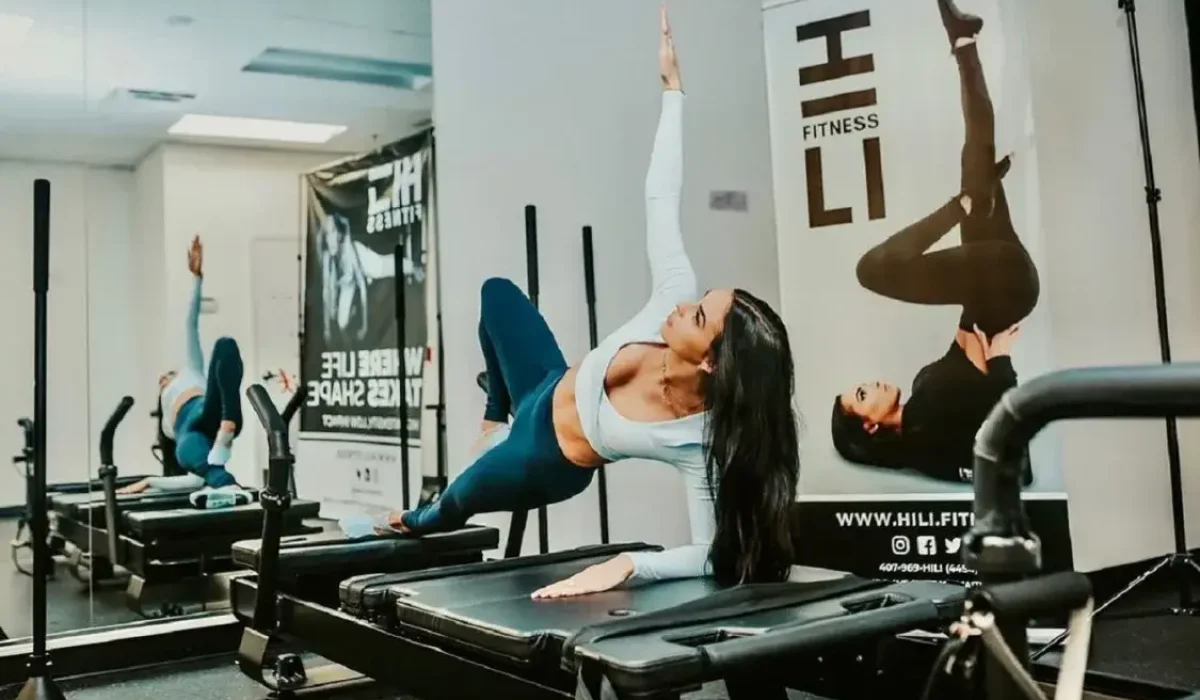
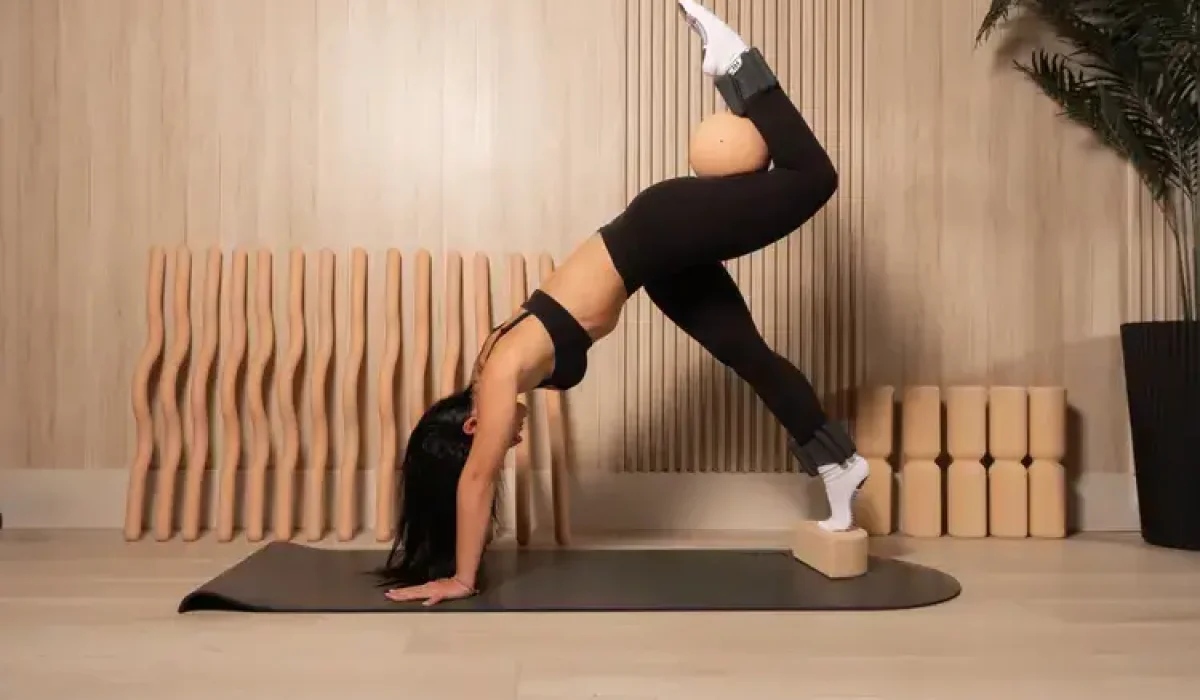
The infrared heat finds you before the class does. Door closes, and within about ninety seconds something in your shoulders lets go — tension you carried in from the parking lot, from the drive, from the week. You haven’t moved yet.
That’s the part nobody warns you about. By the time the first cue lands, your body is already somewhere it normally takes fifteen minutes of warm-up to reach.
That’s the whole argument for hot pilates. Not the sweat. The head start.
Infrared Doesn’t Heat the Air. It Heats You.
Most heated studios work the obvious way — a blower warms the air, the air warms you. Infrared skips a step. The panels emit radiant energy your body absorbs directly, the way sun warms your skin on a cool day without warming the whole yard first.
Where the warmth lands changes everything:
- Forced air heats you outside-in, and loads up the air you’re breathing
- Infrared warms tissue more directly, so the room reads hot without feeling like soup
- HILI’s Hot Mat rooms run 90–104°F — warm enough to change how you move, moderate enough to hold form for 50 straight minutes
It isn’t a sauna. You’re not in there to sit still.
What the Heat Actually Does for You
You Move Further, Sooner
Warm tissue is compliant tissue. Heated muscle and fascia lengthen more readily and fight you less — so the movement you did last week goes further this week without you forcing it.
That matters more in pilates than almost anywhere else, because pilates lives in controlled end-range positions. A few extra degrees of hip opening isn’t cosmetic. It’s the difference between approximating a movement and actually doing it.
You Recover Faster Than You Should
Heat drives vasodilation. Vessels widen, blood moves, more of it reaches working muscle — useful during class, arguably more useful after.
The practical version: less next-day stiffness than the volume of work would predict. That’s what lets you train four or five times a week without accumulating the kind of soreness that makes you skip Thursday.
You Sweat More. Here’s What That Does and Doesn’t Mean.
You will sweat more than you expect. That part is real and it feels excellent.
What sweat is not is detoxification. Sweat is thermoregulation — your cooling system running hard. Your liver and kidneys handle detox, and they don’t need a hot room to do it. Anyone selling sweat as a cleanse is selling you something.
The genuine benefit is simpler: heat raises cardiovascular demand at the same workload. You’re doing more work than the movement alone would ask for. Worth having. Just not magic.
You Get Intensity Without the Pounding
This is where hot pilates earns its place instead of just being a novelty. Heat gets you to real intensity — elevated heart rate, genuine metabolic demand, the shake — through slow, controlled, floor-based work.
No jumping. No landing. No driving your knees into a mat for forty minutes. For anyone managing joint issues, coming back from injury, or planning to still be training in twenty years, that trade is the entire point of high intensity, low impact.

“Just when you think you can’t take the burn another minute, it’s over, and you’ve gotten a complete, full-body workout in only 45 minutes. I’m noticing long, lean lines and noticeable strength.”
Endsley Hewitt


Hot Pilates vs. Regular Pilates
Same principles. Different demand.
| Regular Mat Pilates | Infrared Hot Mat | |
|---|---|---|
| Room | Ambient, climate-controlled | 90–104°F infrared |
| Heart rate | Moderate | Noticeably higher at the same workload |
| Warm-up needed | 10–15 min to reach range | Range is there almost immediately |
| Hardest part | Holding the position | Holding your focus |
| Grip | Reliable | Gets slick — grip socks aren’t optional |
| Builds | Control, precision, strength | All of that, plus heat tolerance and recovery capacity |
| Best for | Learning the movement clean | Deepening range and training density |
Regular pilates is easier to be precise in. Hot pilates is harder to be precise in — which is exactly why it builds something different. Neither replaces the other. Plenty of members do both, and pair the hot room with XFormer resistance work for the strength side.
Deciding where to start? Start where you’ll actually go back. The best format is the one that gets you in the room twice a week.
Your First Hot Class, Handled
Hot pilates suits more people than the name suggests. Every class is instructor-led start to finish and scaled to whoever’s in the room — which is why first-timers do fine in it.

“Took my first hot mat pilates class with coach David and it was amazing. Although it was a challenging class, the pace was great and allowed me to follow along no problem. Coach David was fantastic in offering me modifications.”
Anthony CasulloSix things that make the first one go smoothly:
- Hydrate hours ahead, not in the room. Chugging water at the door is too late.
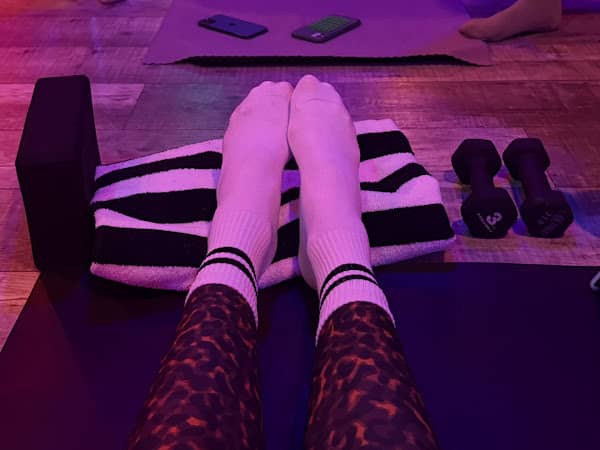
- Grip socks are required. Front desk has them if you need a pair.
- Bring a towel and more water than you think. Both. Every time.
- Wear less than you’d wear to a normal class. Form-fitting, breathable, minimal.
- Take the back row. Nobody’s watching you, and you can see the whole room.
- Eat light, 90 minutes out. A full stomach and a hot room don’t get along.
And if you need to sit down mid-class — sit down. Resting in the heat isn’t failing the class. It’s the correct response to a signal your body is sending, and every instructor in the room will tell you the same thing.
Common Questions About Hot Pilates
Is hot pilates good for you?
Yes, for most healthy adults. Heat improves tissue extensibility and circulation, and pairing it with low-impact pilates lets you train at real intensity without loading your joints. If you’re pregnant, managing a cardiovascular condition, or prone to heat intolerance, check with your doctor first.
What temperature is hot pilates?
HILI’s Infrared Hot Mat rooms run between 90 and 104°F. That’s warmer than a standard studio and cooler than a hot yoga room — hot enough to change how your body moves, moderate enough to hold controlled form for a full 50-minute class.
What’s the difference between hot pilates and regular pilates?
The movement principles are identical; the demand isn’t. Hot pilates adds thermal load, which raises heart rate and cardiovascular demand at the same workload. Regular pilates is easier to be precise in. Hot pilates builds heat tolerance and recovery capacity alongside strength.
How often should I do hot pilates?
Two to four times a week works for most people. Because it’s low-impact, you can train more frequently than with high-impact formats without accumulating joint stress. Start at twice weekly, see how you recover, build from there.
What should I bring to a hot pilates class?
Grip socks (required), a full water bottle, and a towel. Wear form-fitting, breathable clothing. Hydrate for a few hours beforehand rather than only during class.
Heat isn’t a gimmick and it isn’t a shortcut. It’s a tool that pushes controlled movement further into your body than it would otherwise reach — and then lets you come back and do it again tomorrow.
That’s what compounds.